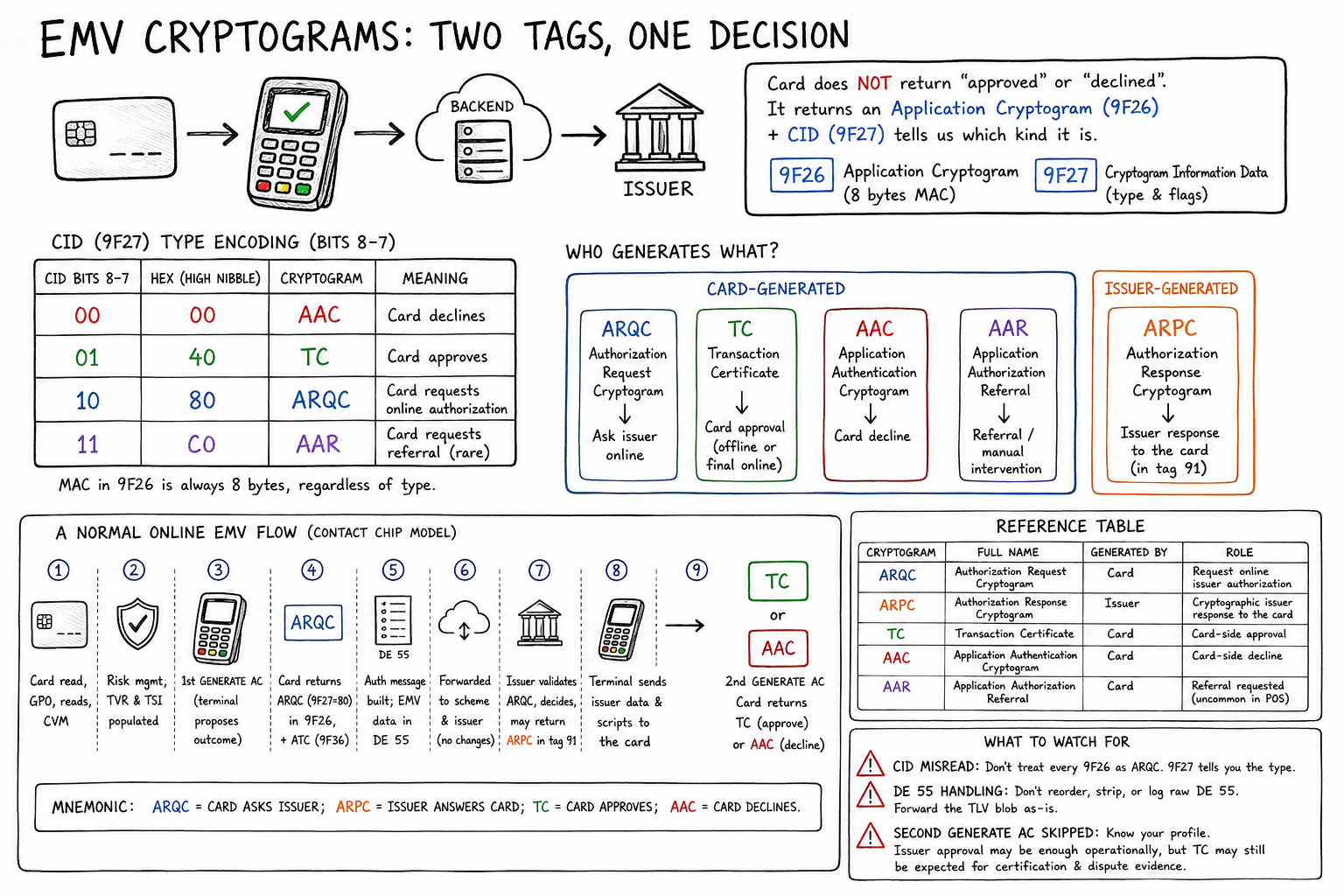
ARQC, TC, and AAC: A Field Guide to EMV Application Cryptograms
In EMV chip transactions, the card does not simply return “approved” or “declined” as plain text. It returns an application cryptogram: an 8-byte MAC bound to that transaction’s …
In EMV chip transactions, the card does not simply return “approved” or “declined” as plain text. It returns an application cryptogram: an 8-byte MAC bound to that transaction’s …
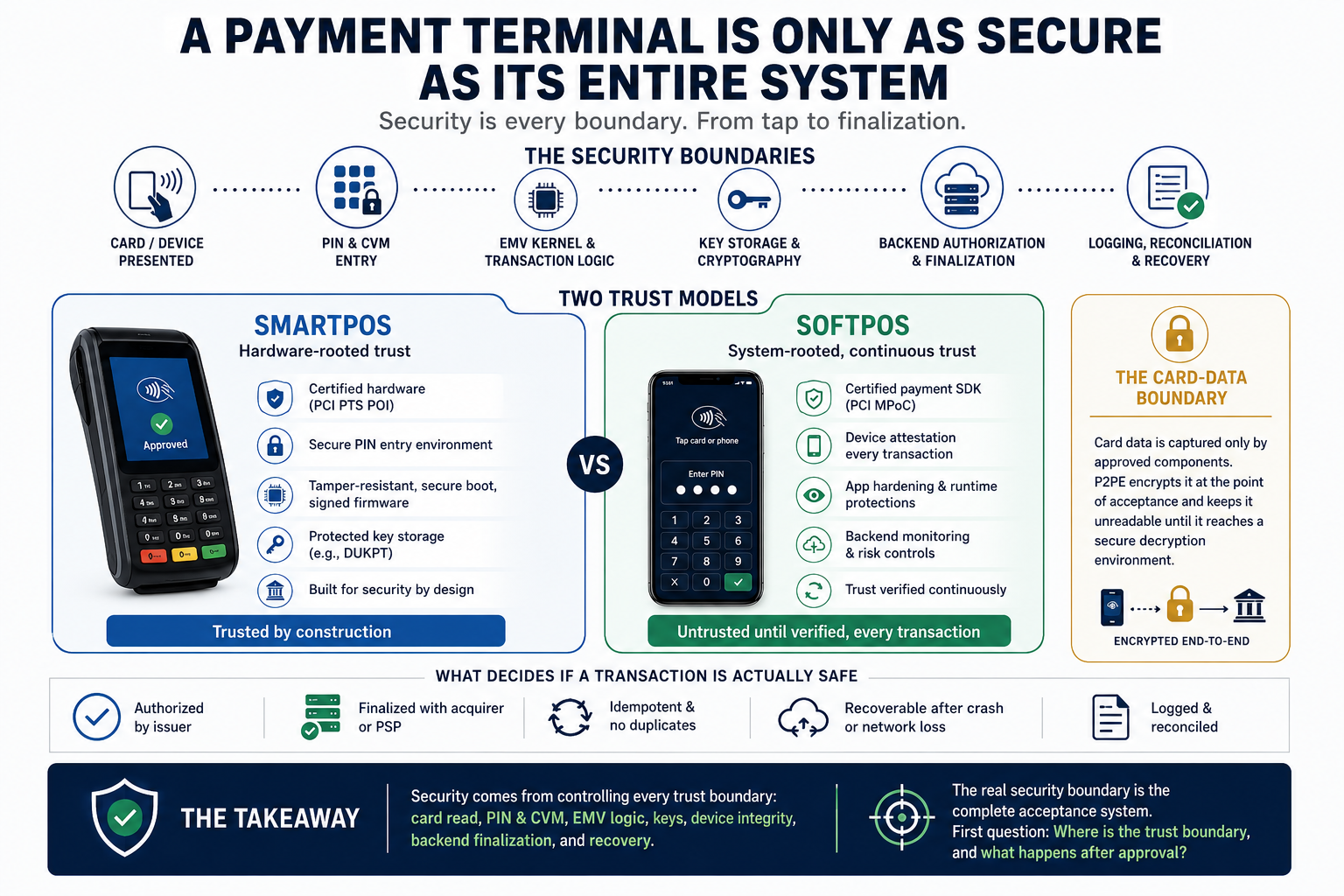
In the POS systems I have worked on, “is this terminal secure?” almost never has a hardware-only answer. The card read is one boundary. The PIN entry is another. So are …

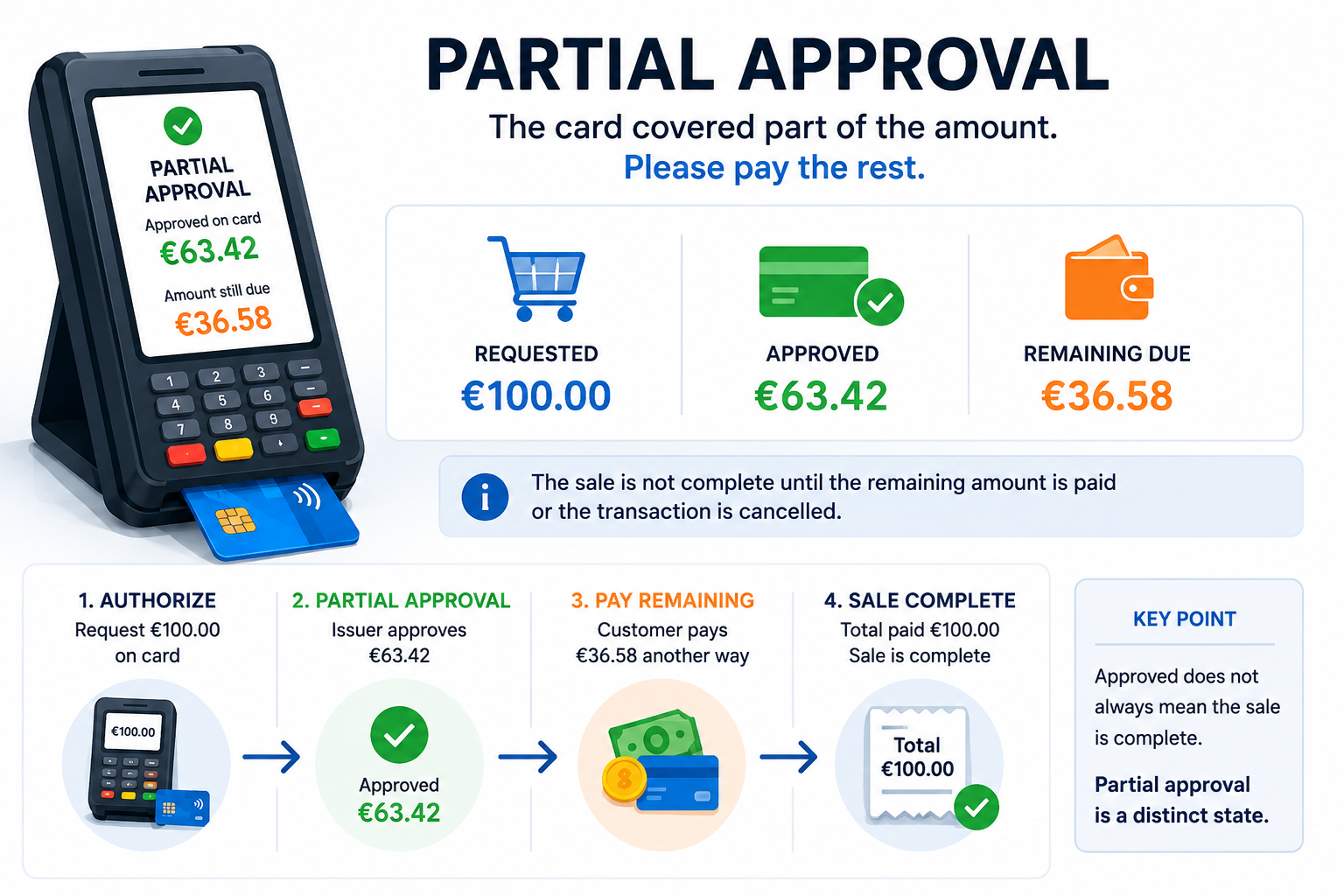
A partial approval is not a decline and not a completed sale. ISO 8583 response codes and amount fields must be read together — and the terminal must not show a green APPROVED …

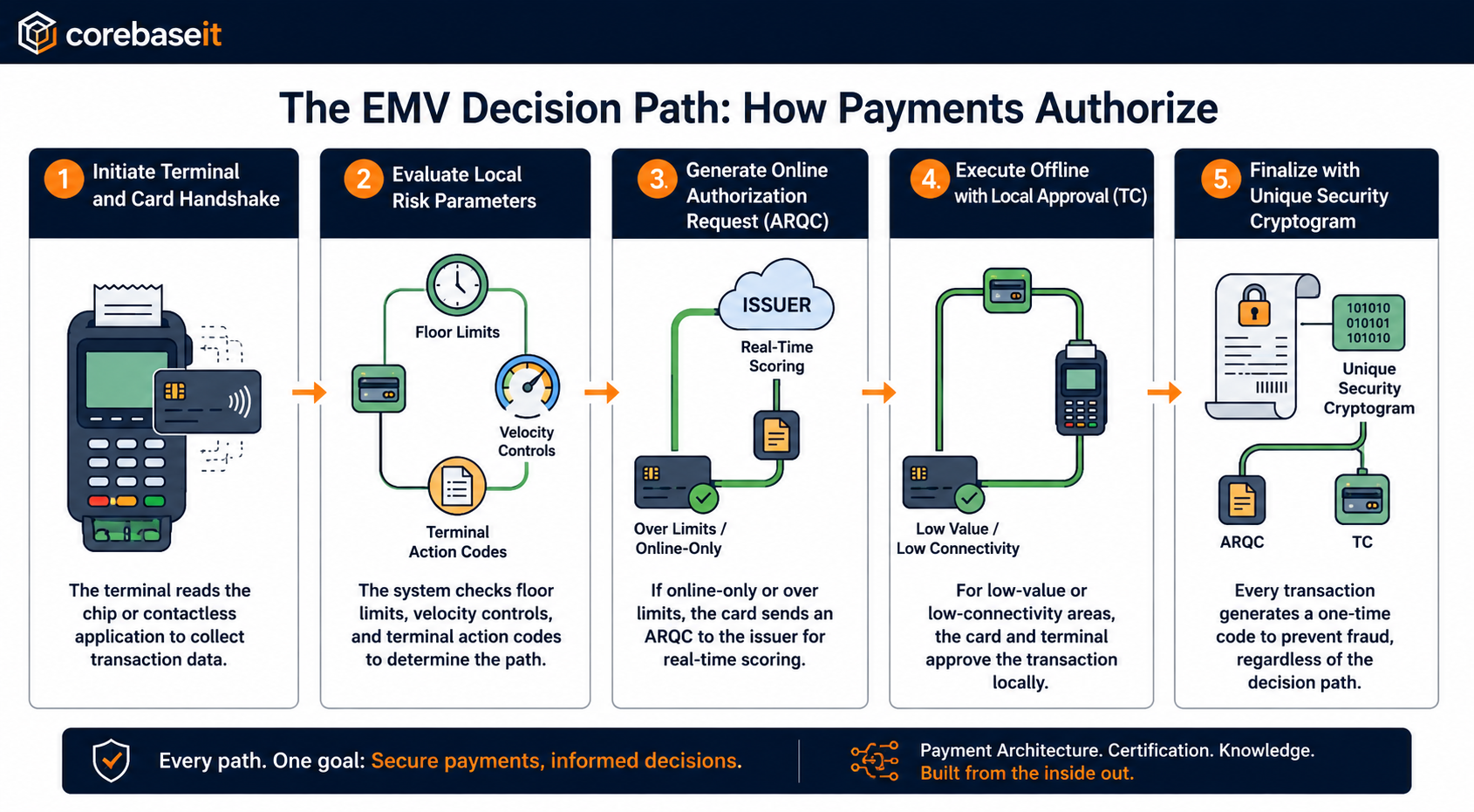
Online vs Offline EMV Transactions: Why Offline Still Matters In EMV payments, “online” and “offline” do not mean secure and insecure. They describe where the transaction decision …

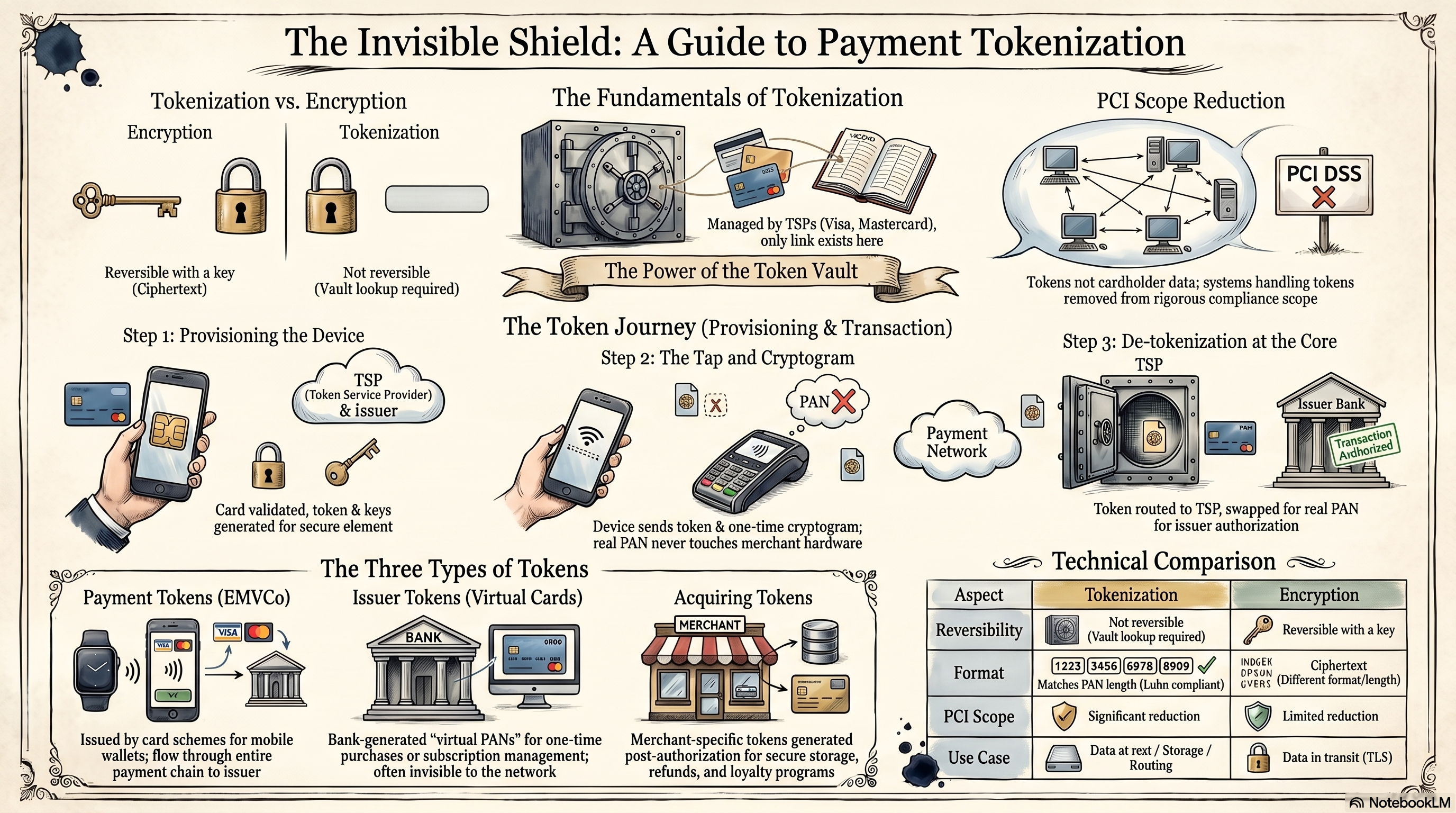
Every time you tap your phone at a terminal, add a card to an online merchant, or set up a recurring subscription, the system doesn’t use your actual card number. It uses a …

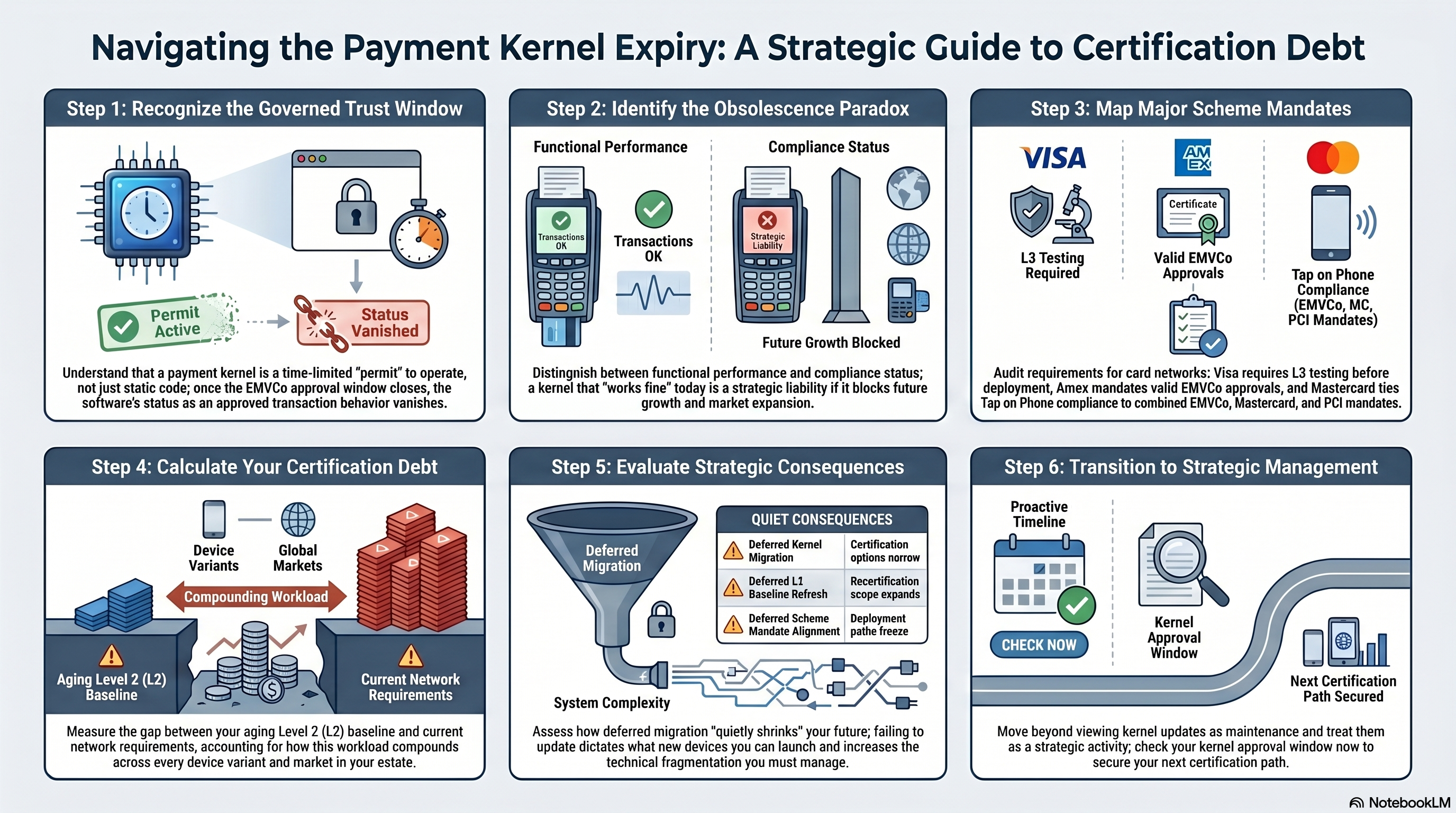
Old code isn’t the problem. Expired approvals are. Kernel lifecycle is really compliance alignment: whether the Level 2 (L2) kernel on your terminals still sits inside an …

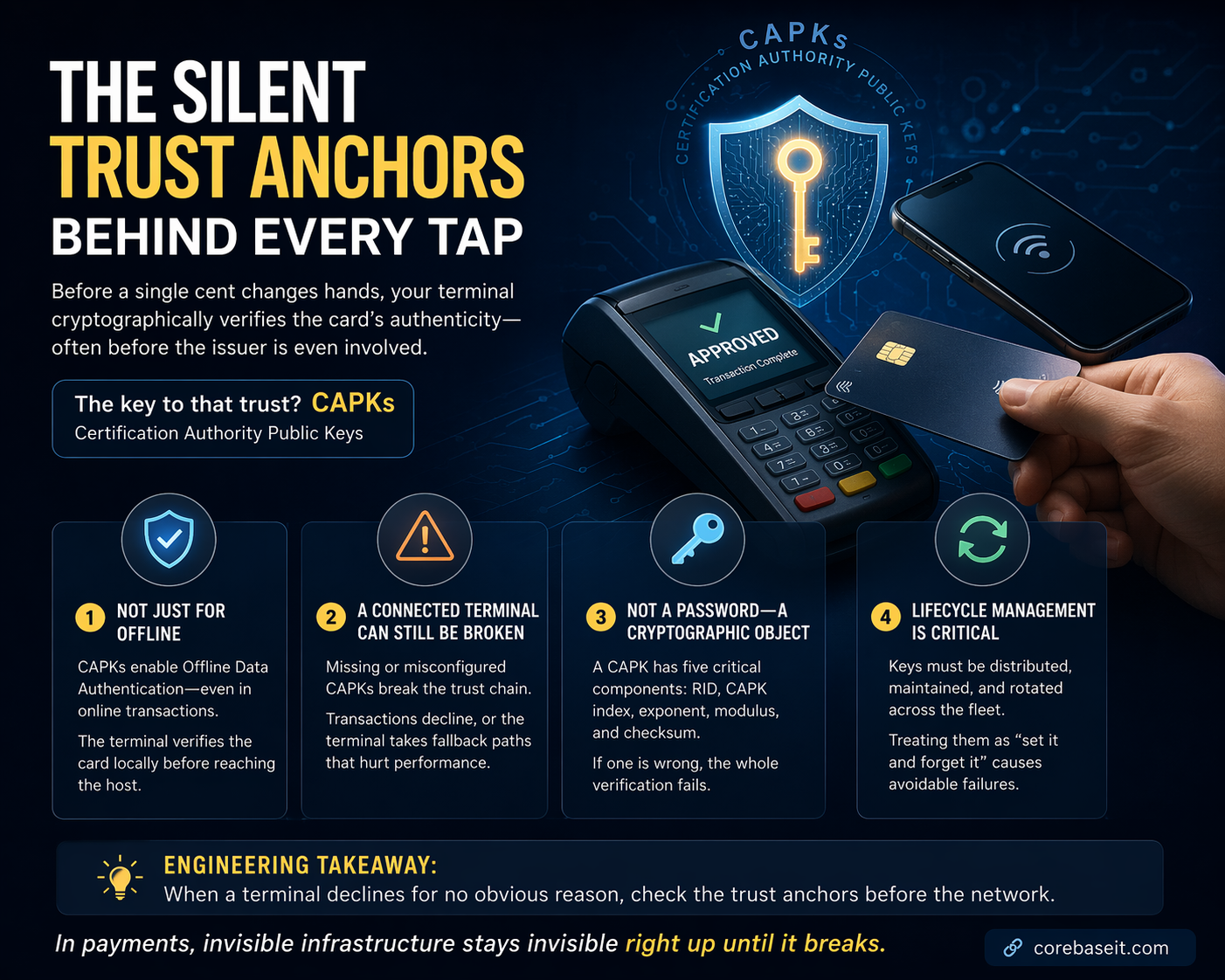
Every card-present transaction begins with a question the terminal must answer before anything else: is this card genuine?

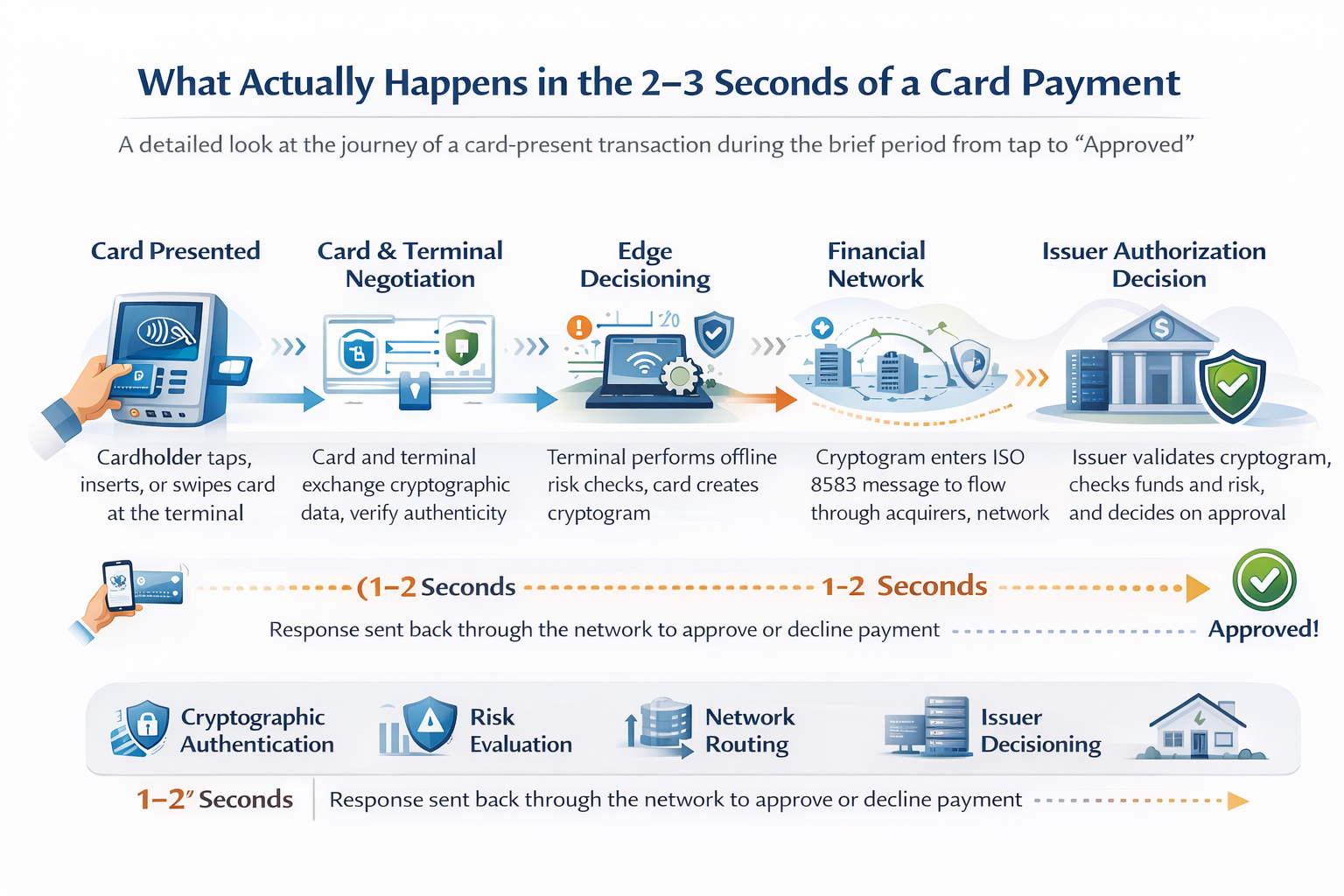
A card payment feels instantaneous. The system behind it is not.
The POS terminal has quietly become critical financial infrastructure — and most architects are still designing it like a payment endpoint.
EMV authenticates the card. PIN still helps authenticate the cardholder.